
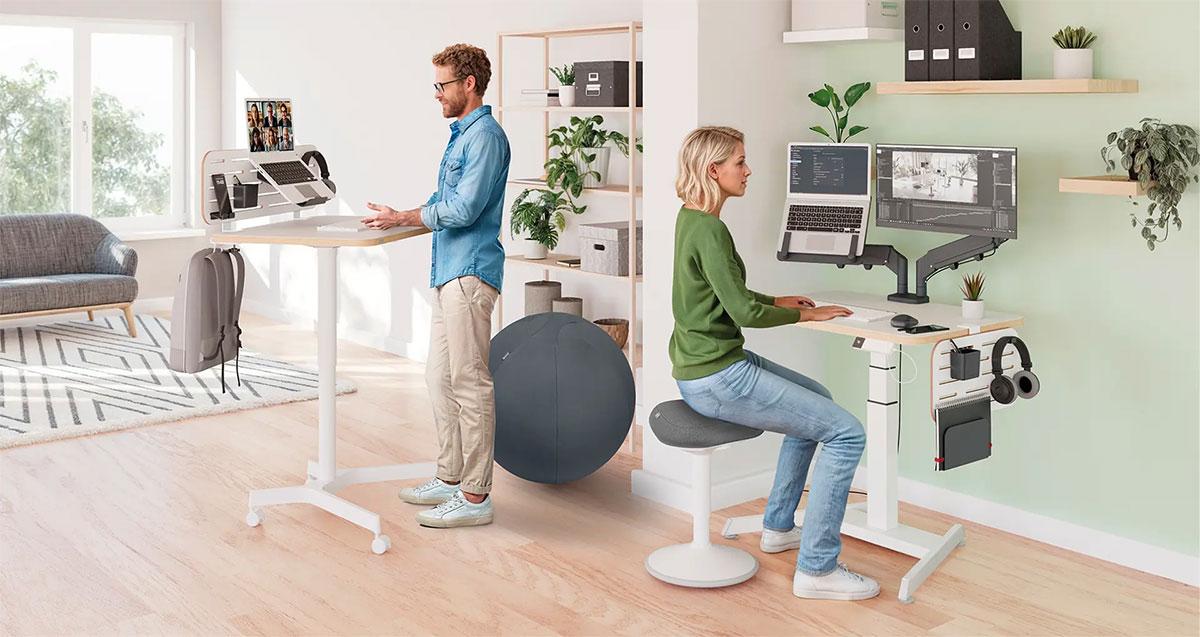
What is the perfect position for sitting at work? The question always comes up, and the most honest answer is that there isn’t one. That was the conclusion of a study Leitz carried out with the IGR, the German institute for health and ergonomics, on wellbeing in hybrid working.
The study followed 41 people for four to six weeks, in public, private and social organisations, from healthcare to industry and services. Before they were given new equipment, the picture was this: 91% already felt the aches or discomfort typical of people who spend the day at a computer, almost always in the neck, shoulders and back. Fewer than a quarter had a height-adjustable desk, around 70% worked with the laptop sitting directly on the desk, and almost 85% had no mouse or keyboard designed for the job. You will probably recognise your own workstation here.
What changed after six weeks
At the end of the trial period, 81% of the participants said the ergonomic solutions had made a difference to their comfort and performance. The relief was felt mostly in the neck, in 60% of cases, in the back in 53%, in the shoulders in 40% and in the wrists in 27%. These are good numbers, but they are not the most interesting part of the study.
The most interesting part is that almost two thirds of the participants changed the way they work. They started switching between sitting and standing much more often, and movement became part of the working day without them having to think about it. In other words, the equipment did not correct people’s posture. It gave them the chance to change it several times a day, which is a different thing.
The best posture is the next one
This is the idea behind the Work Actively concept from Leitz, and it is why the question about the perfect position has no answer. The body does not complain about being in a position, it complains about how long it stays there. Two hours straight in a perfect chair do more harm than two hours in which you got up three times, changed the height of the screen and spent a while standing.
In hybrid working this is harder to notice. At home there is no meeting in the next room and no walk to the printer, and it is easy to spend the whole morning without leaving the chair. The upside is that the home workstation is the easiest one to change: it depends on nobody and does not mean rearranging the whole office.
Where to start, and in what order
You do not need to replace your desk to start working better. These six steps are in order of effort and cost, and each one solves a specific problem from the study. Doing the first one this week is worth more than planning all six for next year.
- Lift the laptop off the desk. This is what 70% of the participants were missing. A laptop stand brings the screen up to eye level and takes the neck out of the bent position it spends the day in.
- Straighten the wrist. A wrist rest for the keyboard or the mouse costs little, and it is what 27% felt made a difference.
- Support the feet. Anyone who is short or has a high desk spends the day with their feet dangling. A footrest, ideally a rocking one, solves this and keeps the legs moving.
- Set the height of the main screen. If you already have a monitor, a fixed stand or a monitor arm lets you change its height during the day instead of leaving it wherever it happened to end up.
- Try working standing up. You do not need to buy an electric desk. A converter that sits on the desk you already have is enough to find out whether the habit sticks.
- Look after the floor and the chair. If you start standing for long periods, an anti-fatigue mat or a balance board helps, and if you spend the day sitting, a cushion or a stool that makes you correct your position helps.
None of these steps is the solution, and that is the point. Together, what they do is give you as many positions as possible throughout the day, which is exactly what changed the behaviour of two thirds of the people who took part in the study.
The full study, with the methodology and all the results, is published on the Leitz blog.
Related products
-
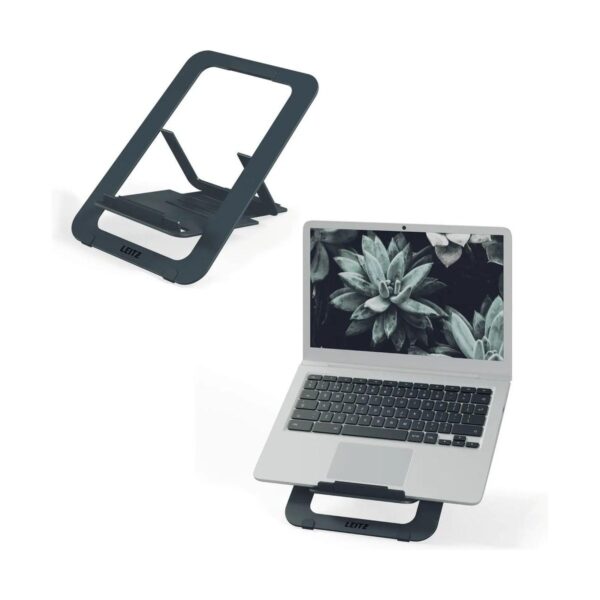
Aluminium ultra-flat adjustable laptop stand Leitz Ergo
30,58 € + VAT Add to cart -
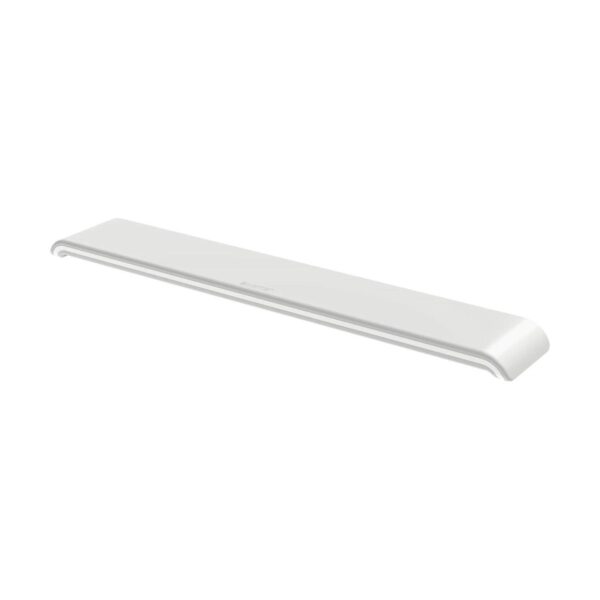
Keyboard wrist rest Leitz Ergo Cosy
27,12 € + VAT Select options This product has multiple variants. The options may be chosen on the product page -
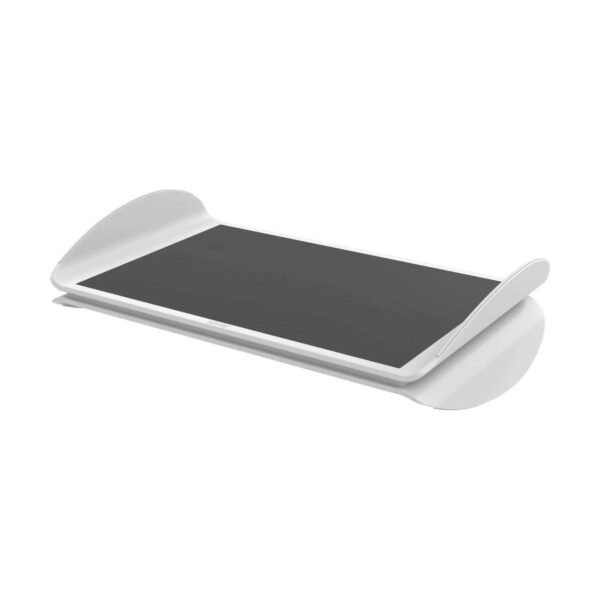
Adjustable rocking foot rest Leitz Ergo
64,13 € + VAT Add to cart -
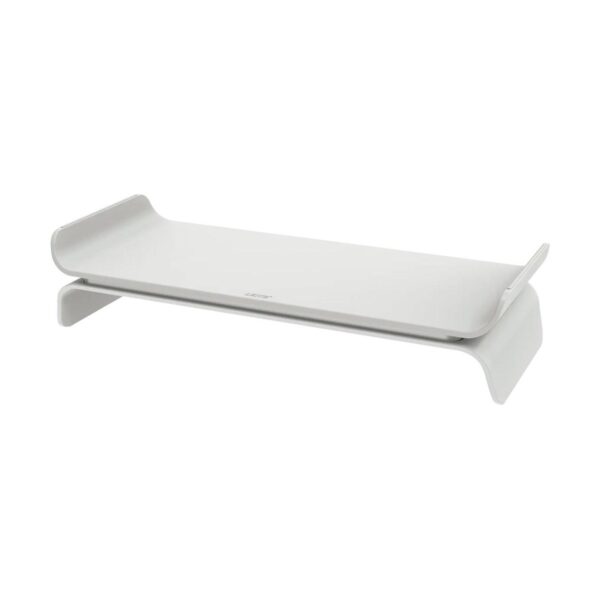
2-height adjustable monitor stand Leitz Ergo
39,96 € + VAT Select options This product has multiple variants. The options may be chosen on the product page -
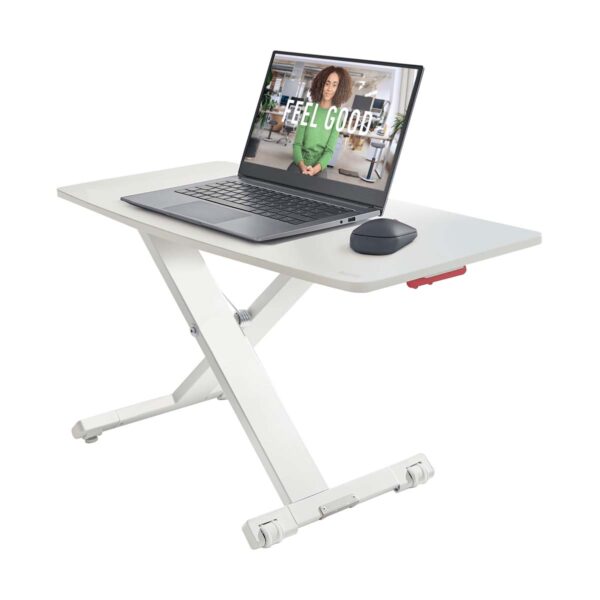
Standing desk converter 48-310mm Leitz Ergo Cosy
103,40 € + VAT Add to cart -
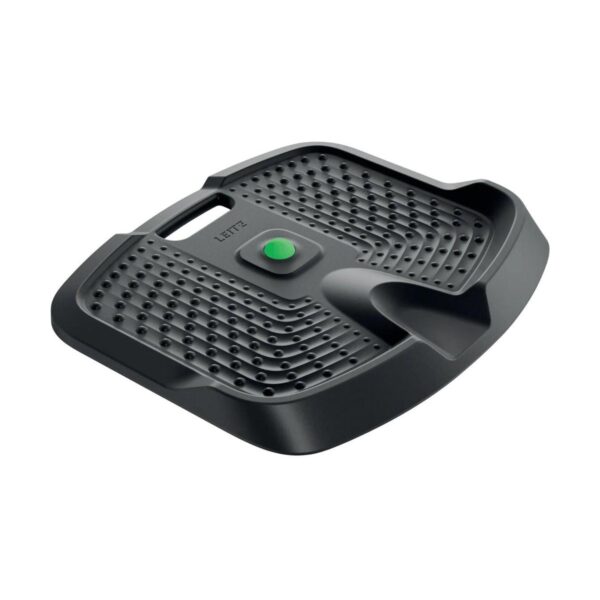
Anti-fatigue mat with massage zones Leitz Ergo Active
79,13 € + VAT Add to cart