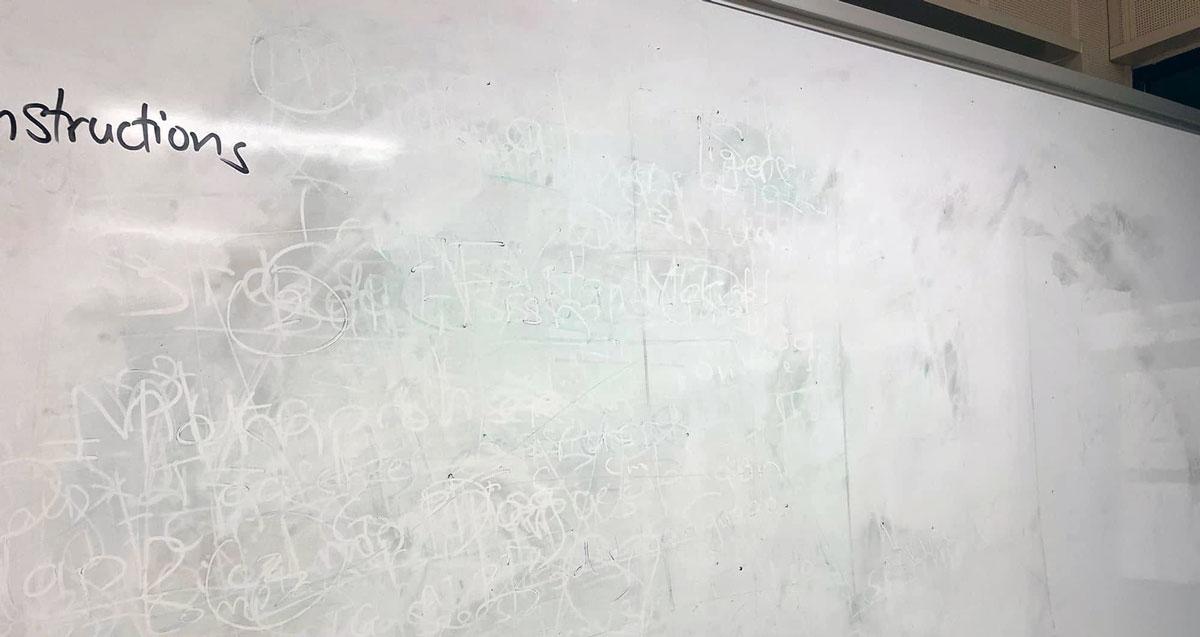
There is a board like this in almost every office. It is stained in the middle, grey, with the ghost of a diagram nobody remembers drawing, and however much you use the eraser, it no longer wipes clean. The first explanation is always the same: it is the fault of cheap markers, or of whoever never cleans it. That is only partly true.
Part of the blame really can be the cleaning. Ink left on the board for weeks on end, a product that was not made for the job, or never giving it a deeper clean, all of that ruins a board that was good to begin with. The other part, the bigger one, is the surface, and that is decided on the day you buy it.
The ink does not sit on top, it gets in
Most cheap whiteboards have a melamine surface, a sheet of pressed resin. Seen up close, that surface is porous: it has microscopic pores where the marker ink settles. While the ink is fresh it all comes off, but what stays in the pores will not come out with any eraser, and it builds up. That is why a melamine board wipes clean in the first month, wipes reasonably after a year and, after three years, has a stain that will no longer come off. It always appears in the middle of the board, which is where everyone writes.
On melamine, the best cleaning in the world only delays this. It is still worth doing and putting the problem off for a few months, but it does not prevent it: the ink is already in. That is why, three years later, you are looking at catalogues again. It is worth understanding the difference before choosing that second board.
Scratches make the problem worse. A scratch from a dragged magnet or a fingernail opens a groove that holds ink for good, and at that point the board never wipes clean again, however good the cleaning product.
Tempered glass has none of this, because there is nowhere for it to happen. It is a closed surface, with no pores, no fibres and no paint to wear off. The ink really does sit on top and comes off completely, today and ten years from now. Nobo itself describes the glass surface of its Impression Pro range as the most resistant to ink stains, pen marks, scratches and dents in its whole line-up, and the difference shows most on boards that are used every day.
What is behind the glass
A glass board is magnetic, even though glass is not. The explanation is literally behind it: between the glass and the wall there is a metal sheet, and that is what the magnet holds on to, through the whole thickness of the glass. That alone is why it is worth knowing that only strong magnets work here, 32 and 38 mm, because small ones are not strong enough to hold through the glass and fall off with the paper.
The mounting system is behind it too. On frameless models the brackets are hidden behind the board, which gives it the look of a panel stuck to the wall, and is half the reason a glass board goes somewhere on show, like a glass-walled meeting room, a reception area or a kitchen. It is the only kind of board people also choose for how it looks.
When it pays off, and when it does not
It is not for everyone, and that is worth saying. A glass board costs more and is heavier, so the wall has to take the weight and it does not mount itself. For a board used three times a month, in an office or at home, it is not justified: a lacquered steel board lasts much longer than melamine and costs much less than glass. That is where cleaning matters again: on well-kept lacquered steel the surface lasts for years, and on badly kept lacquered steel it shows.
Glass pays off when the board is used every day, when it is in a room clients walk into, or when you have already bought a cheap whiteboard and found out it only lasts two or three years. In that last case you pay twice: for the cheap board and, three years later, for the glass one anyway.
What it takes to make it last
Very little, and that is the point. A dry microfibre cloth is enough for everyday use, and every so often a product made for writing boards removes the film the ink leaves behind. There is no need to restore the surface, because it does not wear, and that is why a glass board cleans in less time than a three-year-old melamine board.
It is worth using markers made for writing boards. Leaving writing in the sun for weeks is the surest way to make a glass board harder to clean. Otherwise, the board you buy today will wipe clean the same way when you move offices.
Related products
-
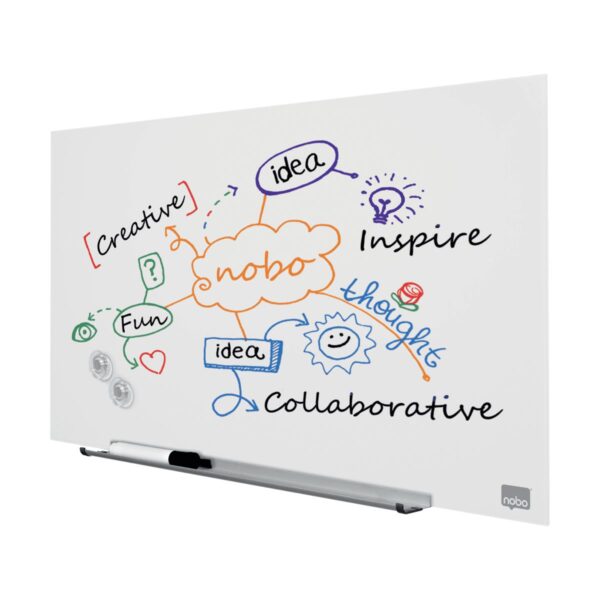
Magnetic white glass writing board Nobo Impression Pro
Price range: 26,08 € through 425,36 € + VAT Select options This product has multiple variants. The options may be chosen on the product page -
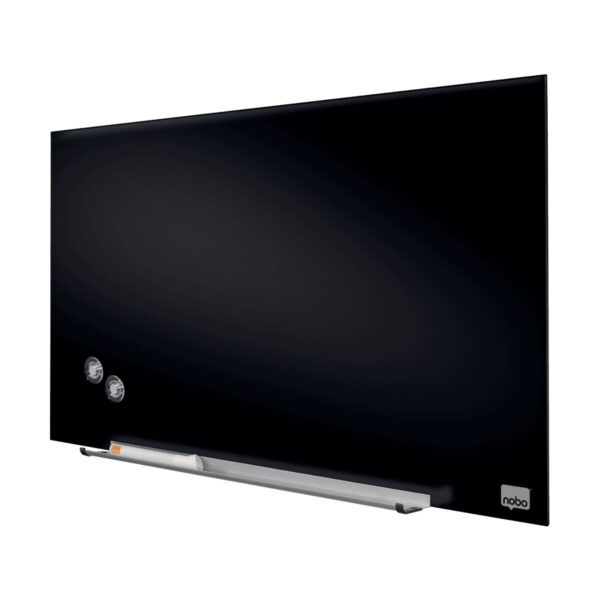
Magnetic black glass writing board Nobo Impression Pro
Price range: 59,15 € through 437,37 € + VAT Select options This product has multiple variants. The options may be chosen on the product page -
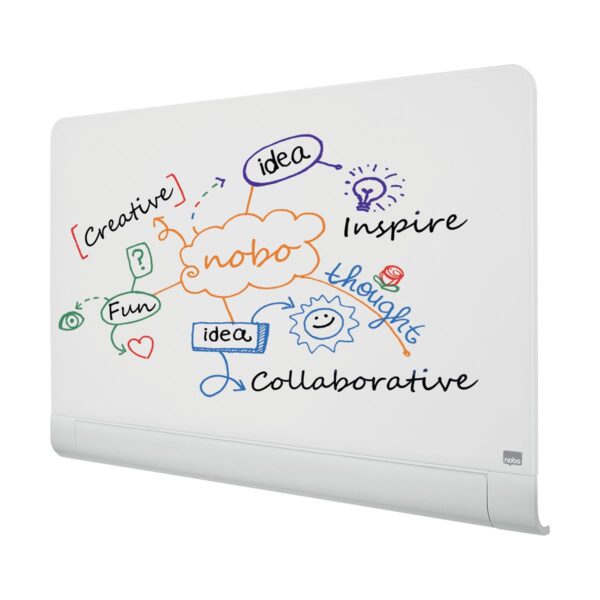
Glass writing board, white, magnetic, with rounded corners, Nobo Impression Pro
Price range: 142,87 € through 488,94 € + VAT Select options This product has multiple variants. The options may be chosen on the product page -
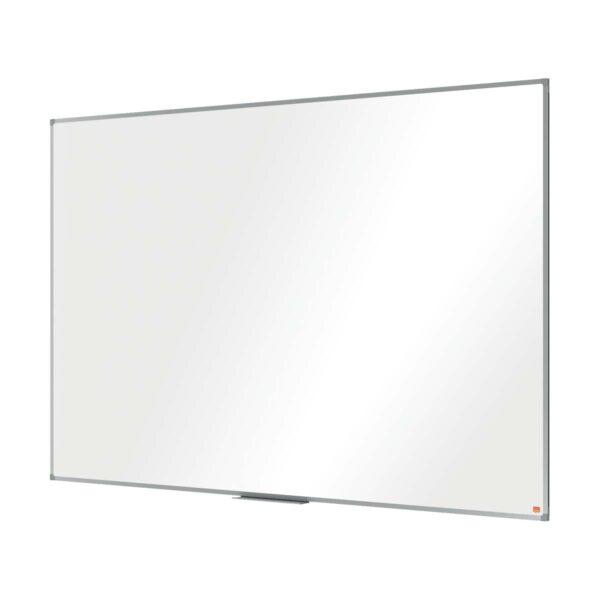
Magnetic white lacquered steel (ceramic) writing board Nobo Essence
Price range: 18,49 € through 150,79 € + VAT Select options This product has multiple variants. The options may be chosen on the product page -
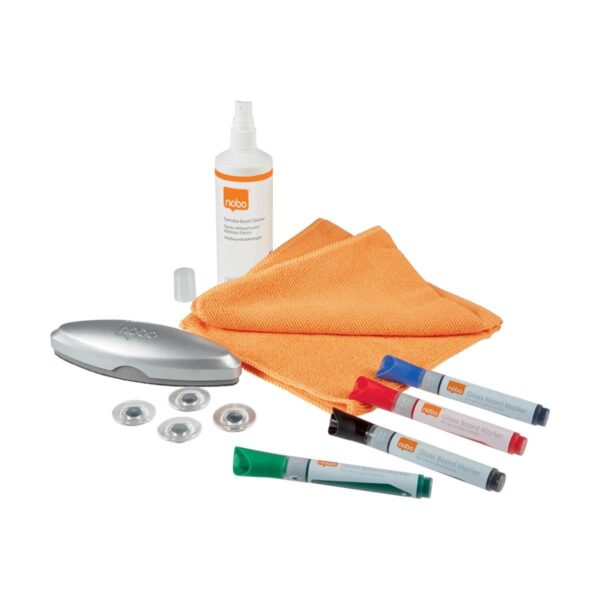
Premium accessory kit for glass boards (11 pieces: 4 markers, eraser, spray, cloth, 4 magnets)
83,63 € + VAT Add to cart -
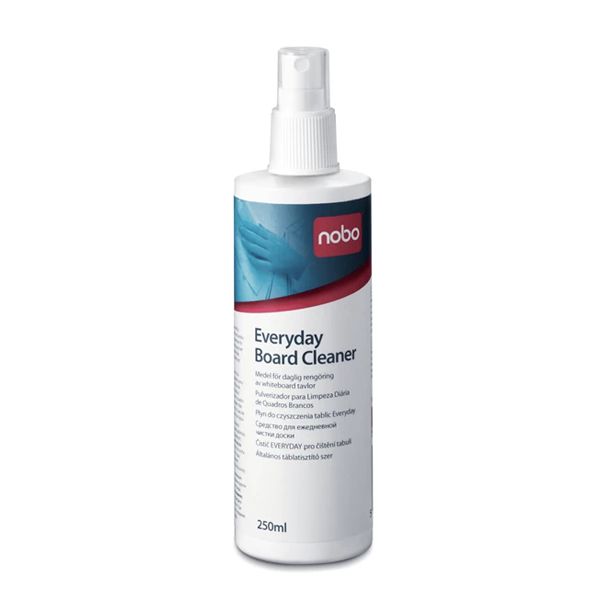
250ml daily cleaning spray for writing boards
6,57 € + VAT Add to cart